It may happen for several reasons, for example, the customer going through liquidation or bankruptcy. If a $1,000 debt results in a $300 recovery, only process $300 through these entries, leaving the remaining $700 written off. A distributor tightened credit limits and introduced 1.5% late fees after 15 days past due. XYZ falls 120 days past due on a $10,000 invoice, and collection Partnership Accounting efforts fail. Learn how small businesses can handle bookkeeping effectively and scale faster with clean books. Due to the drawbacks of the direct write-off approach, the allowance method is more frequently used.
Estimating the Bad Debt Expense

The write-off amount is also a credit to the accounts receivable account directly and it makes the account receivable amount become net Accounting Periods and Methods amount. Bad debt can be reported on the financial statements using the direct write-off method or the allowance method. The client initially promised to pay after three months but didn’t do so.
Inaccurate Financial Statements
Companies typically classify bad debt as uncollectible around the 90-day-to-120-day mark. The direct write-off method is extensively used in the United States for Income tax purposes. The direct method has the precision and accuracy of the actual amount going to bad debts. This article will explain what exactly bad debts are and how to do accounting for bad debts.
Revenue Recognition

Once the company becomes aware that the customer will be unable to pay any of the $10,000, the change needs to be reflected in the financial statements. The estimated percentages are then multiplied by the total direct write-off method amount of receivables in that date range and added together to determine the amount of bad debt expense. The table below shows how a company would use the accounts receivable aging method to estimate bad debts. According to the GAAP standards, expenses and revenues need to be recorded in the same accounting period.
The allowance method creates bad debt expense before the company knows specifically which customers will not pay. Based on prior history, the company knows the approximate percentage or sales or outstanding receivables that will not be collected. Using those percentages, the company can estimate the amount of bad debt that will occur.
This method works well if you run a small business with limited credit sales, a service-based business with few customers, or a business that primarily sells for cash. It’s practical when bad debts are a small portion of your total sales and you don’t need to estimate them. Estimates can be based on percentage of credit sales, percentage of receivables, or an aging of receivables. This approach adheres to accrual accounting, improves comparability across periods, and provides more reliable financial statements.
- Bad debt arises when a customer either cannot pay because of financial difficulties or chooses not to pay due to a disagreement over the product or service they were sold.
- Therefore, while the method is acceptable for tax purposes, it may not be suitable for financial reporting in accordance with these standards.
- Because of this, Larry’s Lumber makes an accounting entry for this $5,000, classifying it as a bad debt expense.
- Let’s consider an example to understand how a business uses the direct write-off method to account for bad debts.
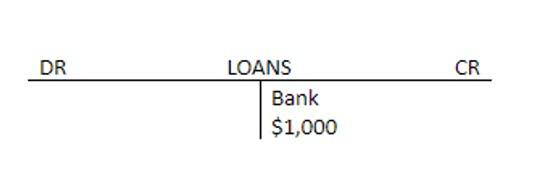
- Accounting for this recovery requires a two-step process to ensure the company’s books and the customer’s ledger are correctly reinstated.
Calculating Bad Debt Under the Allowance Method
Under the allowance method, this write-off reduces accounts receivable and the allowance, with no new expense at the time of write-off. When an allowance adjustment is made, it typically involves debiting the bad debt expense and crediting the allowance for doubtful accounts. This journal entry reflects the anticipated loss without directly impacting the accounts receivable balance until a specific account is deemed uncollectible. The allowance method, on the other hand, prepares for potential bad debts through an estimation process. Instead of waiting until a debt is deemed uncollectible, businesses create an allowance for doubtful accounts based on historical data and current economic conditions in bad debt accounting. This allowance is used to adjust the accounts receivable balance, providing a more accurate picture of anticipated cash inflows.
Accounts Receivable Solutions
The direct write-off method is relatively simple to implement and can provide more accurate financial reporting by eliminating uncollectible accounts from the balance sheet. However, it can also result in large and unexpected fluctuations in net income, particularly in periods when a significant number of accounts become uncollectible. Bad debt recovery is generally treated as income on your financial statements. With the direct write-off method, it either reduces your bad debt expense in the current period or appears as “other income” if you wrote off the original debt in a previous period. Recovering a bad debt strengthens your balance sheet by increasing either cash (if you receive payment) or accounts receivable (if you reinstate the debt before payment). The boost in assets improves key financial ratios, like your current ratio and accounts receivable turnover, signaling more effective collection practices.
No Responses